
Molten metal is poured into a rotating mould, ensuring dense and uniform structure. This process is ideal for cylindrical components like liners with superior strength and minimal defects.

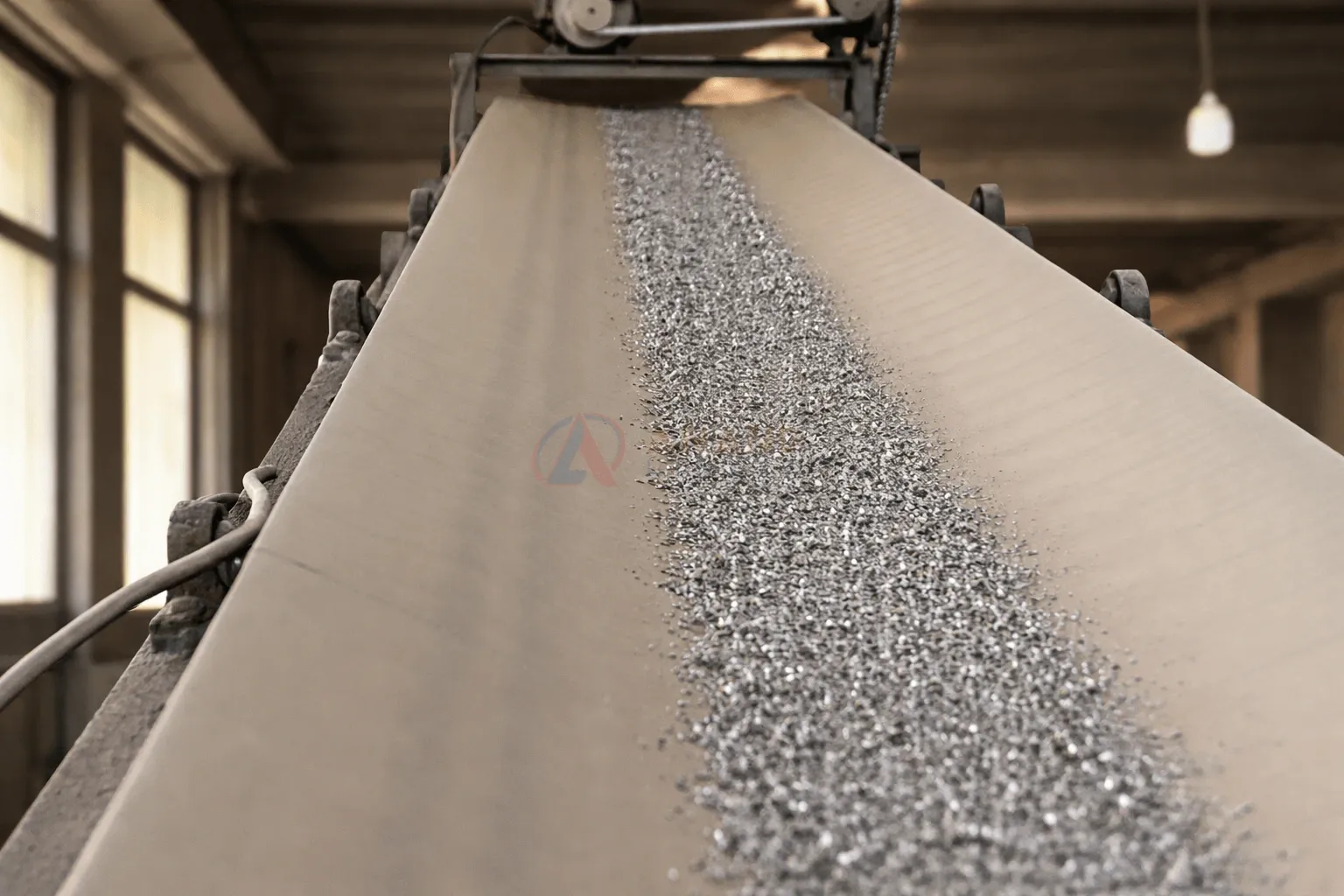
High-quality cast iron is used as the primary raw material in the centrifugal casting process. Carefully selected grades of pig iron, steel scrap, and alloying elements are melted in a controlled furnace to achieve the required chemical composition and mechanical properties.
The molten metal is purified and treated to ensure uniformity, strength, and durability. This results in cast iron with excellent wear resistance, hardness, and structural integrity—ideal for high-performance components like cylinder liners.
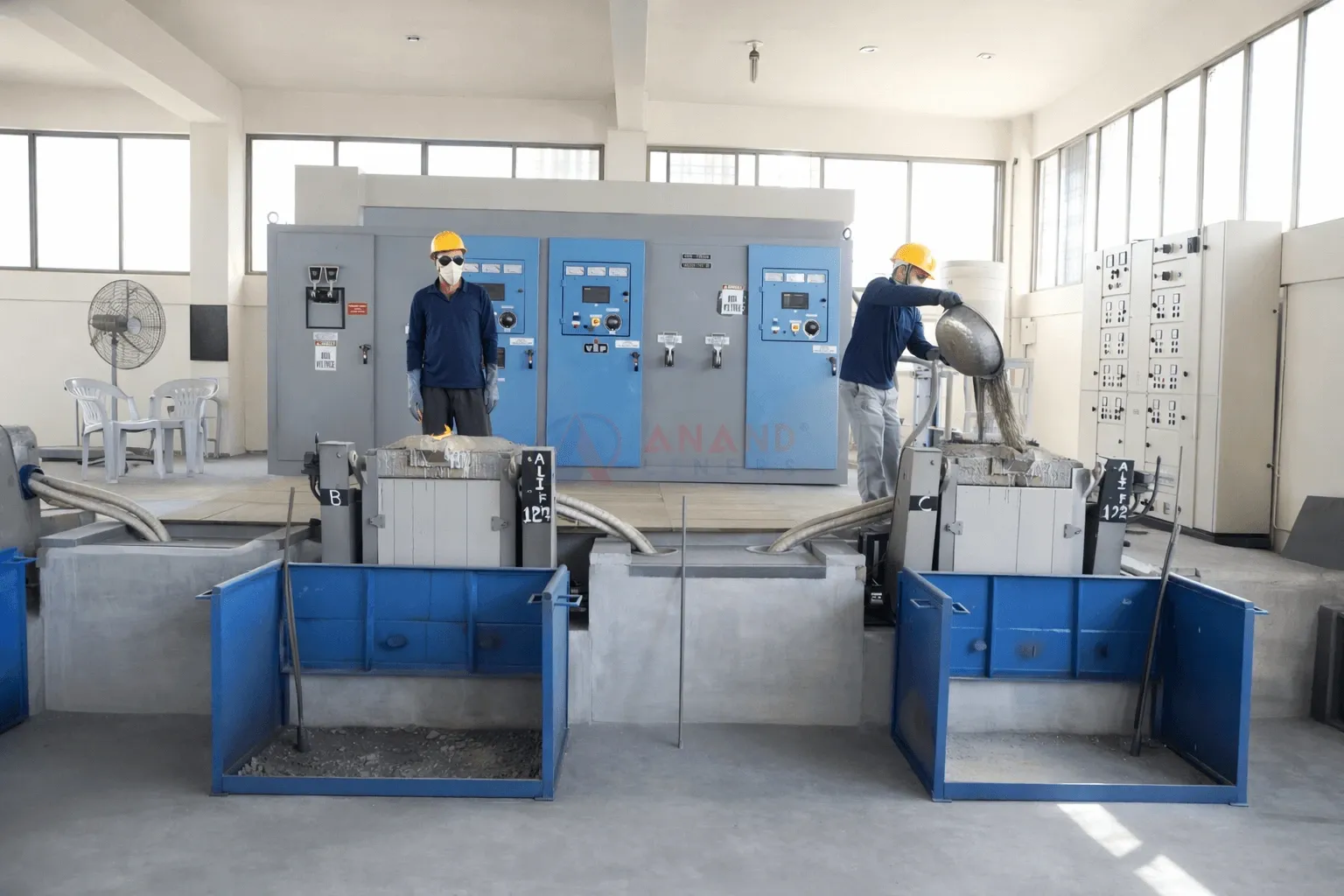
Cast iron is melted in a controlled furnace at high temperatures to achieve precise chemical composition and consistency. During melting, impurities are removed and alloying elements are adjusted to meet required specifications.
The molten metal is carefully monitored for temperature and quality, ensuring optimal fluidity and uniform structure—essential for producing high-performance centrifugal cast components. Generally, cast iron is melted at temperatures between 1200°C and 1400°C (2192°F to 2552°F) in a furnace, which is hot enough to melt the iron and any other alloying materials that are added to it. The exact melting temperature can also depend on the specific grade of cast iron used, as different grades of cast iron have varying compositions and properties. For example, grey cast iron typically has a lower melting temperature than ductile cast iron, due to its higher carbon content.
At Anand Liners we have five 500 kg medium frequency induction furnaces, our production capacity is 250,000 pcs (1050 MT tonnes) per month.
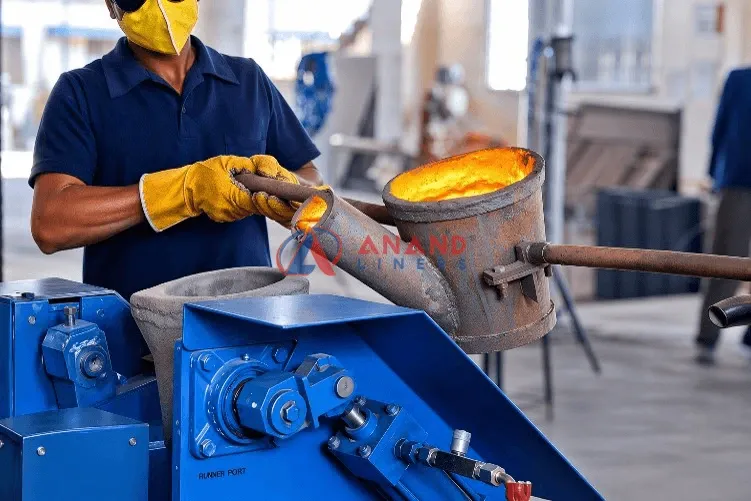
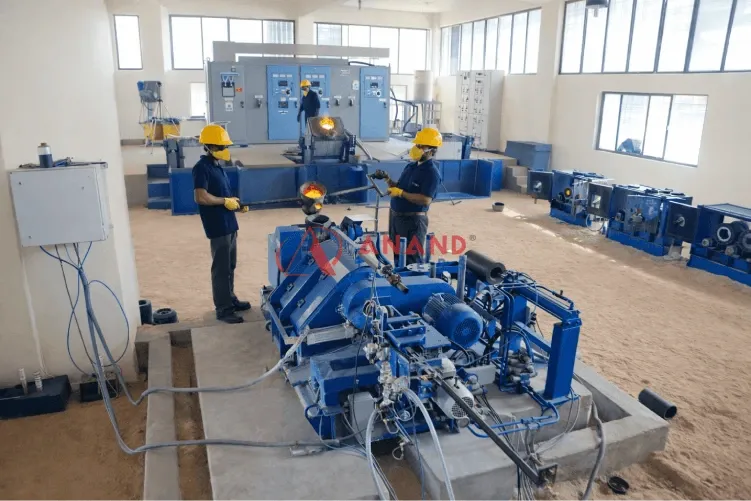
The mold is a cylindrical steel shell, slightly larger than the final liner size, with an inner refractory coating to prevent metal sticking. It is preheated to 200–300°C to ensure proper surface finish and microstructure.
Molten cast iron at 1200–1400°C is poured into the mold while it rotates horizontally at 900–1500 rpm. The centrifugal force distributes the metal evenly along the inner surface, forming a uniform cylindrical shape.
As rotation continues, the metal solidifies with consistent wall thickness and improved properties. After cooling, the liner is removed, excess material is machined, and further finishing is carried out if required.
This process ensures uniform structure, low porosity, and superior mechanical strength, making it ideal for high-quality cylinder liners used in engines, compressors, and pumps.
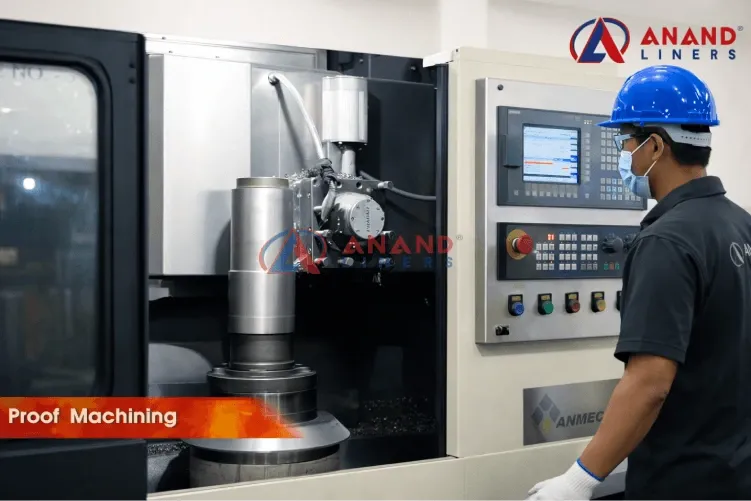
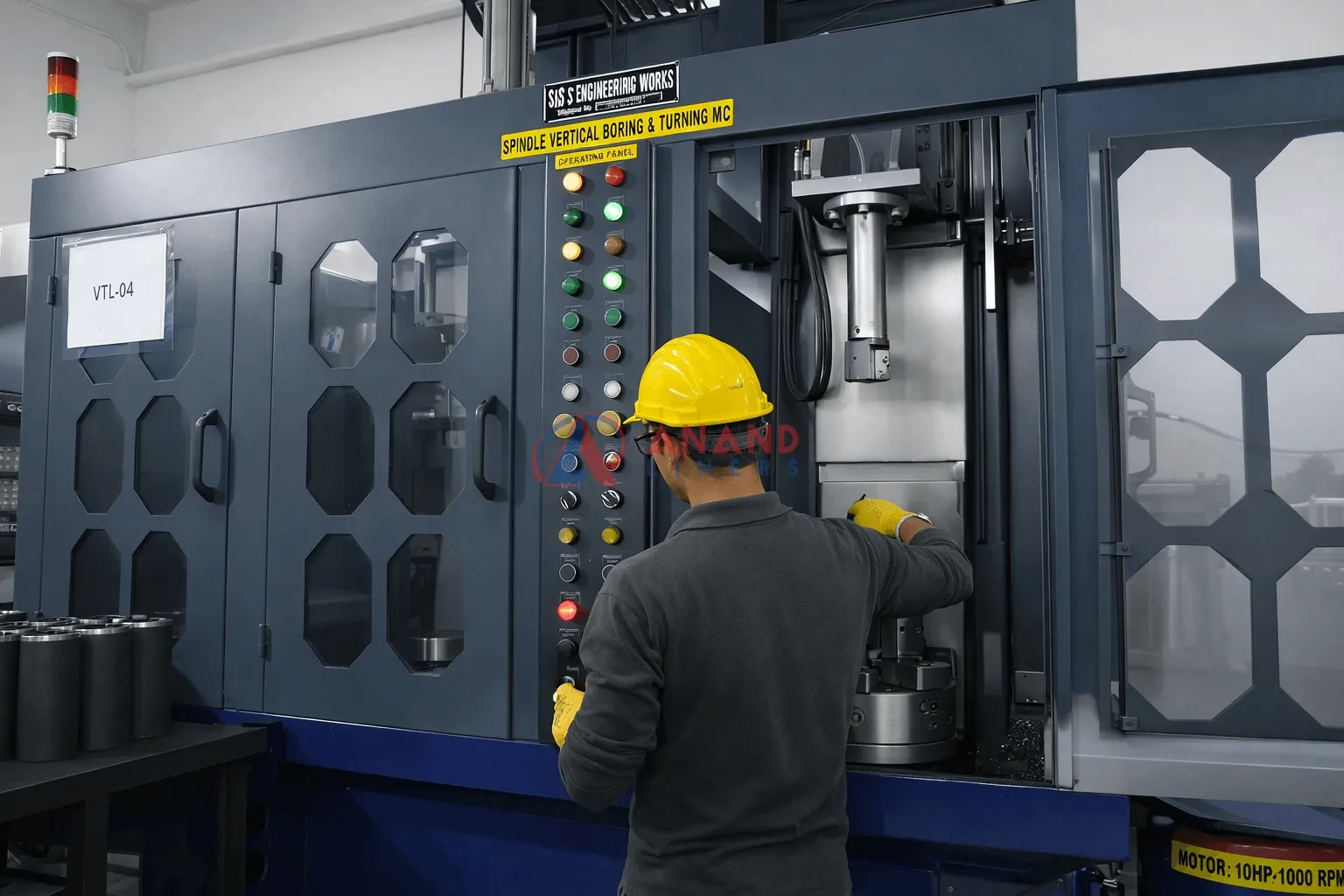
Cylinder liners are first cleaned using shot blasting to remove impurities and securely clamped on VTL (SPM) machines. A rough machining process removes 0.5–1.0 mm material to ensure proper alignment and centering.
The liner is then measured using precision instruments to check dimensions and tolerances. If within range, proof machining is carried out to achieve accurate size and finish.
After machining, the liner is re-measured to confirm specifications before final finishing. This process ensures dimensional accuracy, reduces rework, and maintains consistent quality standards.
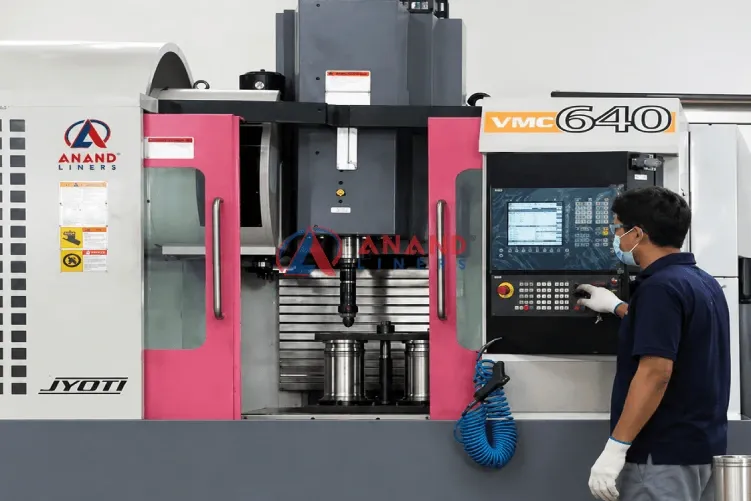
Fine boring is a precision finishing process used to achieve accurate bore size and smooth surface finish in cylinder liners. The liner is securely mounted and aligned on advanced boring machines with controlled cutting parameters.
Initial rough boring ensures a uniform starting diameter, followed by fine boring where a minimal amount of material is removed to achieve final dimensions and superior surface finish.
The bore is then checked using precision instruments like dial bore gauges and roundness testers. If required, additional finishing such as honing or grinding is carried out.
This process ensures high dimensional accuracy, smooth finish, and reliable performance of cylinder liners.
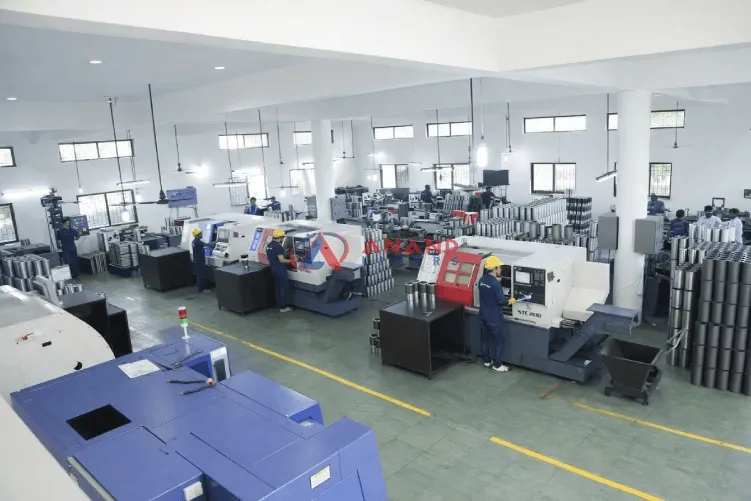
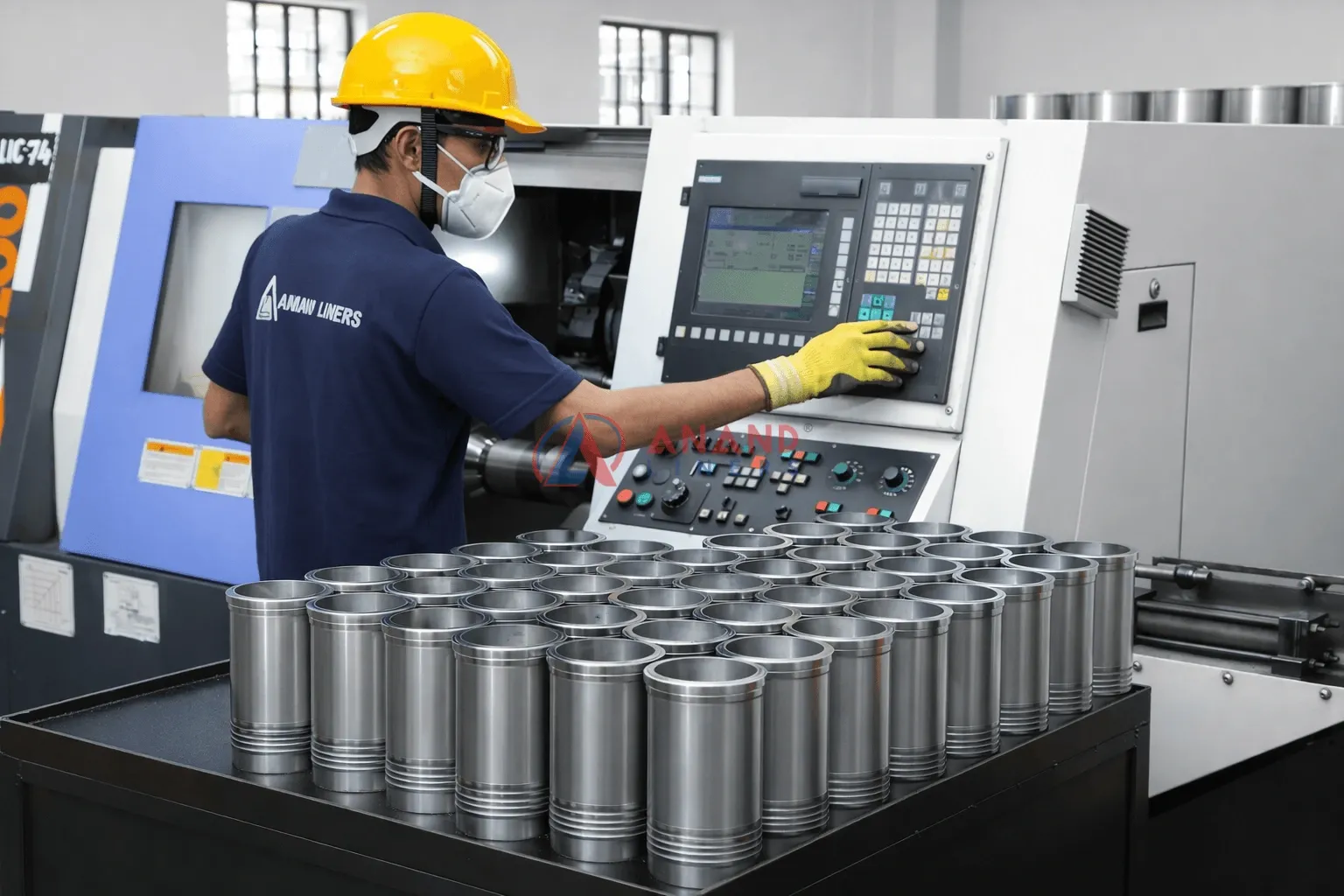
The CNC outer diameter process is a critical step in the manufacturing of cylinder liners as it helps to ensure that the final product has the precise dimensions and surface finish required for proper function and durability. By using advanced CNC machines and precise cutting tools, we are able to produce cylinder liners with excellent accuracy and surface finish.
This process involves using a CNC (Computer Numerical Control) machine to achieve the final outer diameter and surface finish of the cylinder liner. At Anand Liners CNC process typically involves the following steps:
1. Preparing the cylinder liner: The cylinder liner is cleaned and mounted securely in a collet on the CNC machine. The machine is programmed with the desired cutting parameters, such as feed rate, spindle speed, and depth of cut.
2. Roughing: A roughing tool is used to remove a small amount of material from the outer diameter of the liner to create a consistent starting diameter.
3. Semi-finishing: A semi-finishing tool is used to remove more material and achieve a smoother surface finish.
4. Finishing: A finishing tool is used to remove the final amount of material and achieve the desired surface finish and dimensional accuracy.
5. Measuring the liner: After the CNC outer diameter process is complete, the cylinder liner is measured using precision measuring tools such as a micrometer, contour machine, roughness tester profile projector etc. to ensure that it meets the required specifications.
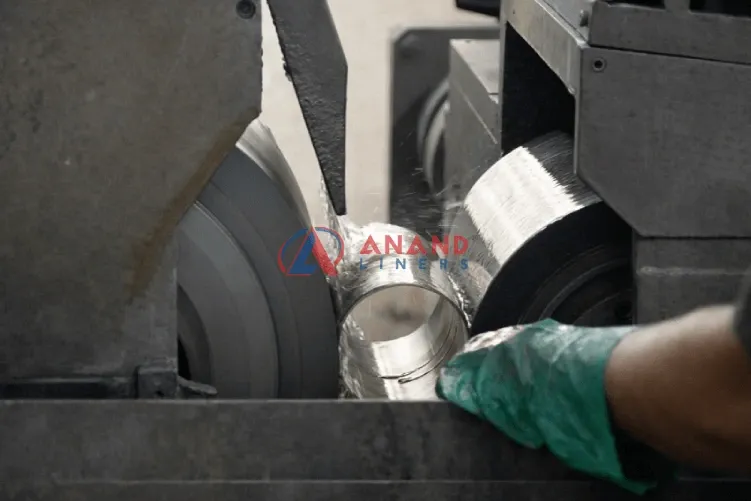
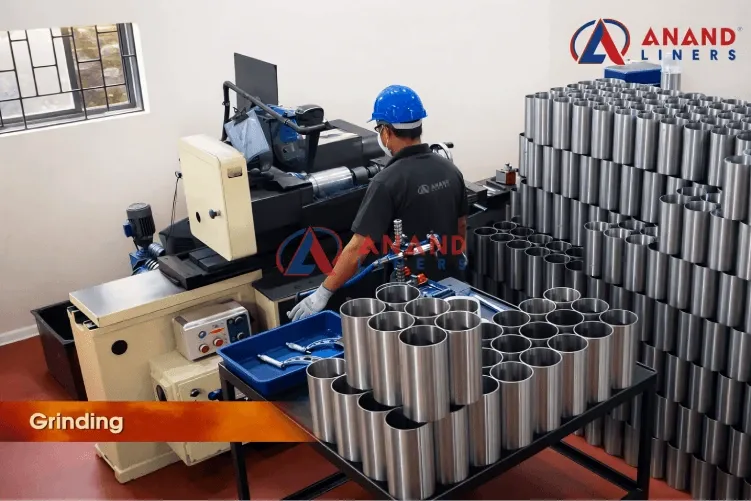
Grinding machining is the final step for dry cylinder liners.
The liner is cleaned and set on a centerless grinding machine. The machine is aligned properly for accurate grinding.
Rough grinding removes excess material to form a base diameter. Finishing grinding gives exact size and smooth surface finish.
After grinding, the liner is checked with precision instruments. Measurements ensure roundness, surface finish, and accuracy.
At Anand Liners, centerless grinding ensures high precision and long-lasting performance of every liner.
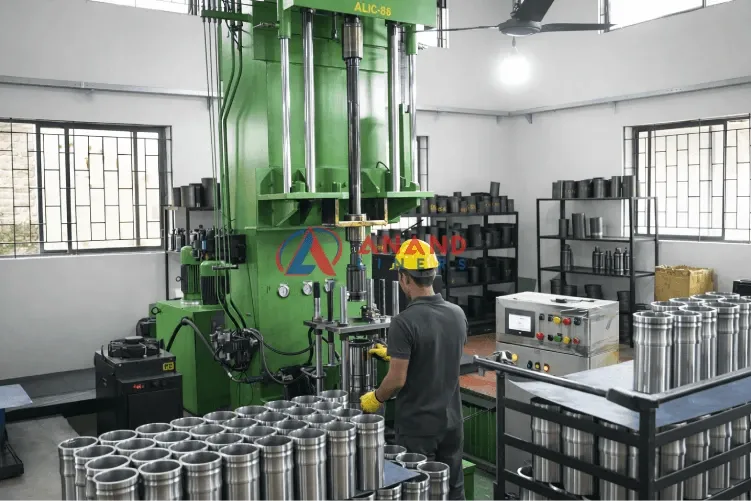
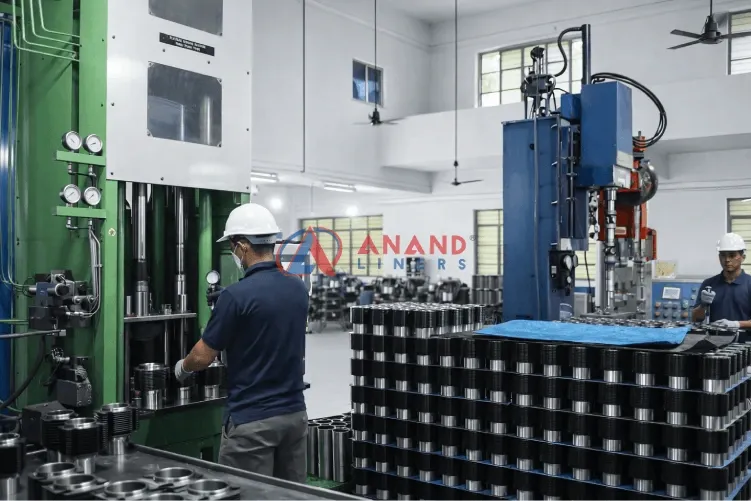
At Anand Liners, plateau honing is a highly controlled and precision-driven process used in the manufacturing of cylinder liners to achieve the desired bore geometry and superior surface finish. This process plays a critical role in enhancing engine performance, lubrication efficiency, and component life.
Plateau honing at Anand Liners is a high-precision finishing process used to achieve optimal bore geometry, superior surface finish, and enhanced functional performance of cylinder liners. The process begins with thorough cleaning and deburring to remove any surface imperfections. Advanced honing machines with specially designed diamond honing stones create a controlled cross-hatch pattern that ensures proper oil retention and lubrication. This is followed by plateau honing using finer stones, which removes surface peaks while retaining micro-valleys, resulting in reduced friction, minimized wear, and improved engine life. Finally, each liner undergoes rigorous cleaning and inspection, where critical parameters such as bore size, roundness, taper, and surface roughness are measured using precision instruments. This highly controlled process at Anand Liners ensures consistent quality, durability, and performance of every cylinder liner.
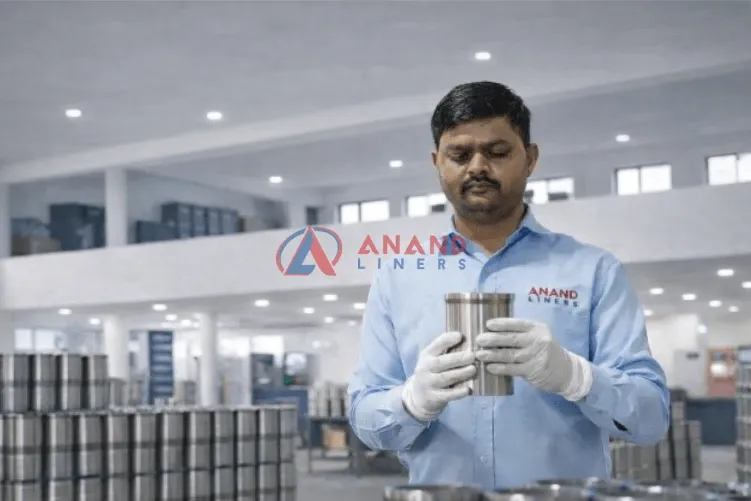
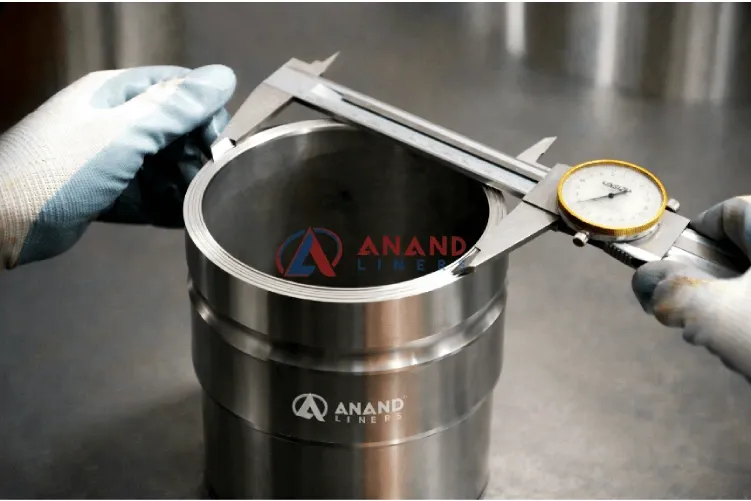
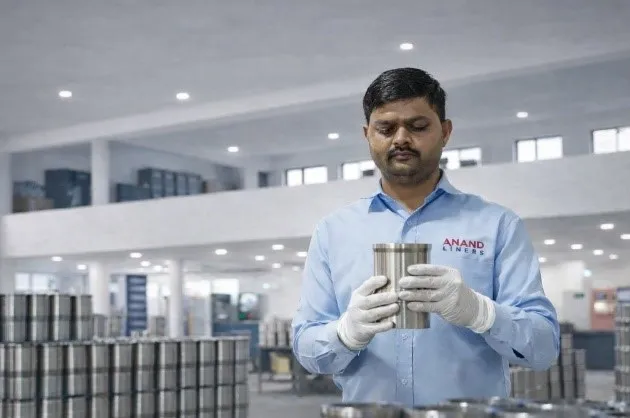
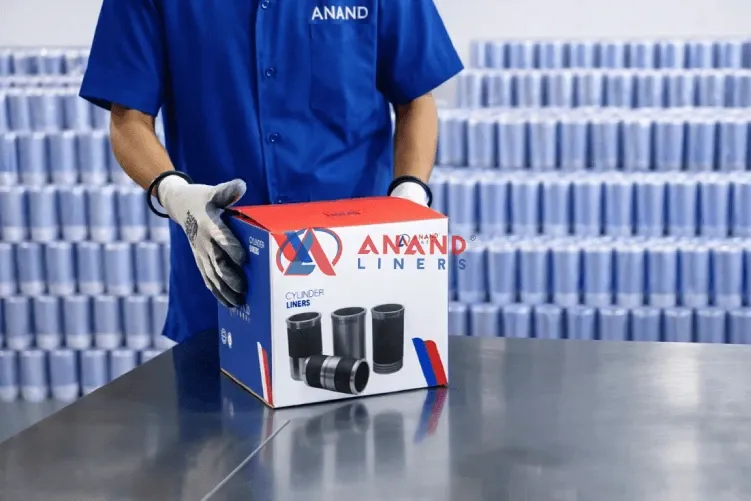
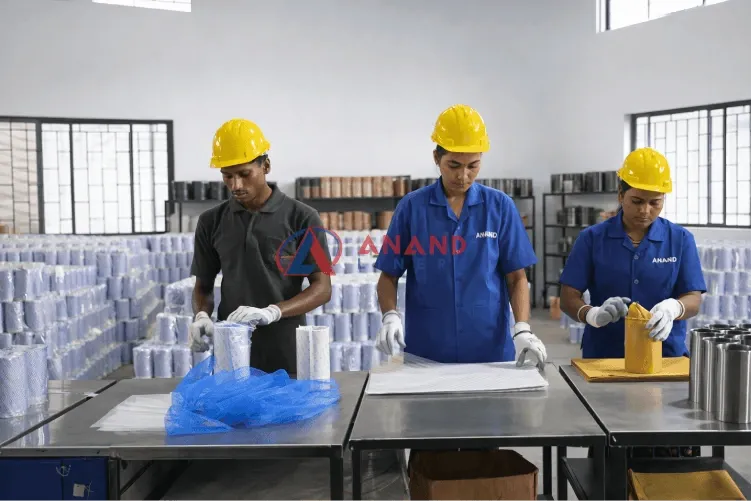
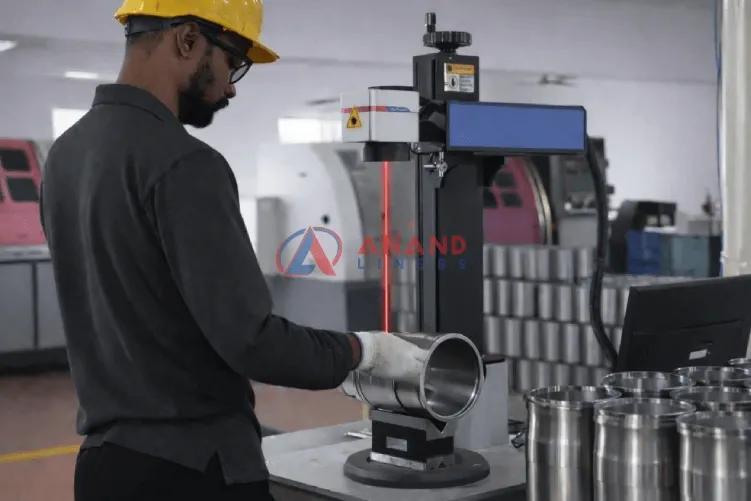
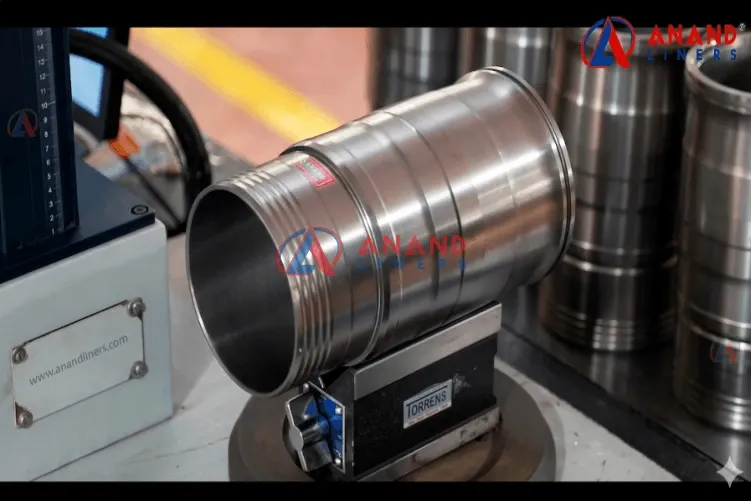
At Anand Liners, Laser Marking, Branding, and Packaging are carried out in a dedicated and well-controlled department to ensure product identification, protection, and presentation meet global standards. Each cylinder liner first undergoes thorough visual inspection and washing to ensure cleanliness and defect-free condition before further processing. Precision laser marking is performed to permanently engrave essential details such as part numbers, batch information, and the Anand Liners brand, ensuring clear traceability and long-lasting identification.
Following marking, the liners pass through a dewatering system and a rust prevention treatment to protect against corrosion during storage and transit. The packaging process is executed in a dust-free environment, maintaining product cleanliness and quality. Anand Liners utilizes advanced equipment such as an automatic lamination machine for corrugated boxes and striping machines to ensure secure and durable packing. Depending on customer and export requirements, products are packed using high-quality corrugated boxes, wooden pallets, and export-grade wooden boxes to ensure maximum safety during handling and transportation.
ANAND LINERS (INDIA) PVT. LTD.
Veraval (Shapar), Anand Liners Gate, Rajkot – 360024, Gujarat – India.
At Anand Liners, we believe that long-term success is built on trust, quality, and customer satisfaction. Our customer-focused approach, technical support, and commitment to delivering reliable solutions continue to make us a preferred global partner in the engine components and casting industry.

You cannot copy content of this page
Javascript not detected. Javascript required for this site to function. Please enable it in your browser settings and refresh this page.
